SHINKANSEN
ART MUSEUM
DENSYO — Japan Art & CulturePrototype 01 · Free Preview
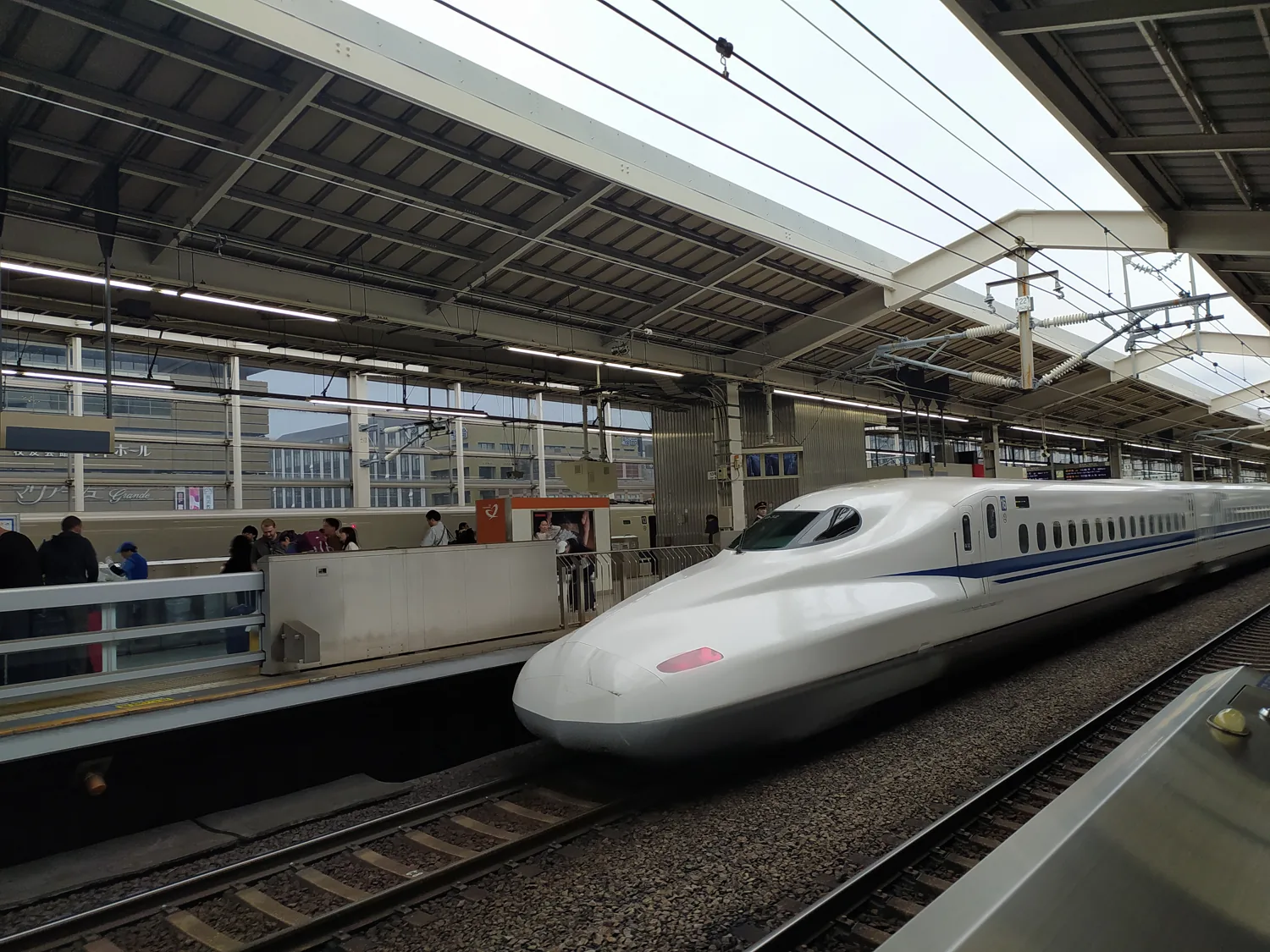
A white N700 Shinkansen bullet train with a blue stripe at Kyoto Station

JAPAN’S BULLET TRAIN × UKIYO-E

JAPAN BY BULLET TRAIN.
A JOURNEY THROUGH ART.

Discover Japan by bullet train — and see its landscapes through artists’ eyes, about 200 years ago. Choose two stations, then explore historic prints beside photographs of the places today.

Choose your journey
N700 · SHINKANSEN / JAPAN
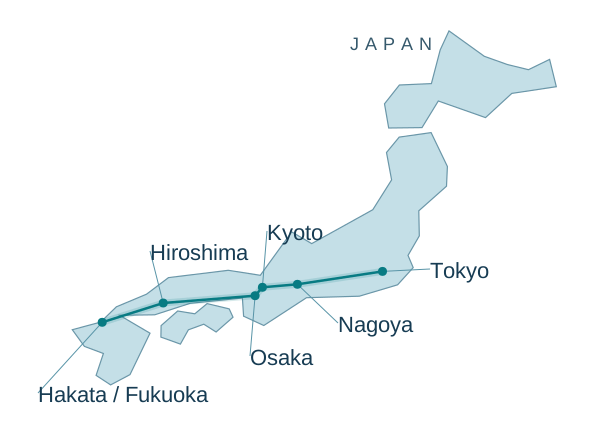
THE CORRIDORTokyo → Hakata
Map of Japan showing the Tokyo–Nagoya–Kyoto–Osaka–Hiroshima–Fukuoka corridor

Major-city overview · schematic connection, not railway track geometry. Hakata is in Fukuoka.

PLACES BECOME PICTURES

Explore a place ↓

Historic places and regional connections. Each print explains its link to today’s station.

Loading verified collection…

Train: Artem.G · CC BY 4.0 · resized / WebP / display crop. Map: Natural Earth, public domain. Art: The Met, CC0.

NEW TO JAPAN? START HERE

Fast trains. Historic art. The same Japan.

Japan is an island country in East Asia. Its modern trains connect cities whose mountains, bridges and streets inspired artists long before railways existed. This museum brings those two worlds together.

01 / ENGINEERING

What is a Shinkansen?

Shinkansen is Japan’s high-speed railway, often called the bullet train. The first line opened in 1964 between Tokyo and Osaka. These are electric trains running on rails, not flying vehicles.

Streamlined shapes help trains move through air. Railway engineering brings together electricity, track design and control systems. Our journey follows the Tokaido and Sanyo lines from Tokyo to Hakata, a station in Fukuoka.

Explore the railway · JR Central ↗
02 / ART & HISTORY

What is ukiyo-e?

Ukiyo-e means “pictures of the floating world”. It is Japanese art that flourished from the 1600s to the 1800s, especially during the Edo period. Edo is the former name of Tokyo.

Artists pictured actors, everyday life and famous places. Many works were woodblock prints: a designer drew the picture, a carver cut wooden blocks, and a printer pressed colours onto paper. A separate block could print each colour.

Learn about woodblock prints · The Met ↗
03 / YOUR DISCOVERY

One place, two views

Choose your boarding and arrival stations. Move along the route to see an old artwork connected to each place and a photograph of the area.

Compare the two: what has changed, and what remains? The prints show historic places, not modern stations. Some links are regional; each caption explains the connection. Where a verified print is still missing, a labelled photograph fills the window.

Choose a route and explore ↓

Meet two landscape masters

Katsushika Hokusai 1760–1849

Hokusai explored Mount Fuji, waves and ordinary people at work. His Thirty-six Views of Mount Fuji includes the famous Great Wave. Look for bold shapes and changing viewpoints.

Utagawa Hiroshige 1797–1858

Hiroshige depicted journeys, rain, snow and changing seasons. His Fifty-three Stations of the Tokaido shows stopping places on the old road between Edo and Kyoto. These road stations were not railway stations.

Landscape history: Library of Congress · Bristol Museum. Individual works have their own artist and date in the gallery.

1800s · WOODBLOCK PRINTING

Craft and precision turn a landscape into layers of colour.

1964 ONWARDS · HIGH-SPEED RAIL

Science and engineering connect the places in those pictures.

Two kinds of ingenuity, one journey: explore Japan’s advanced railway technology alongside its historic art.

FIND YOUR WAY

Where in Japan are we?

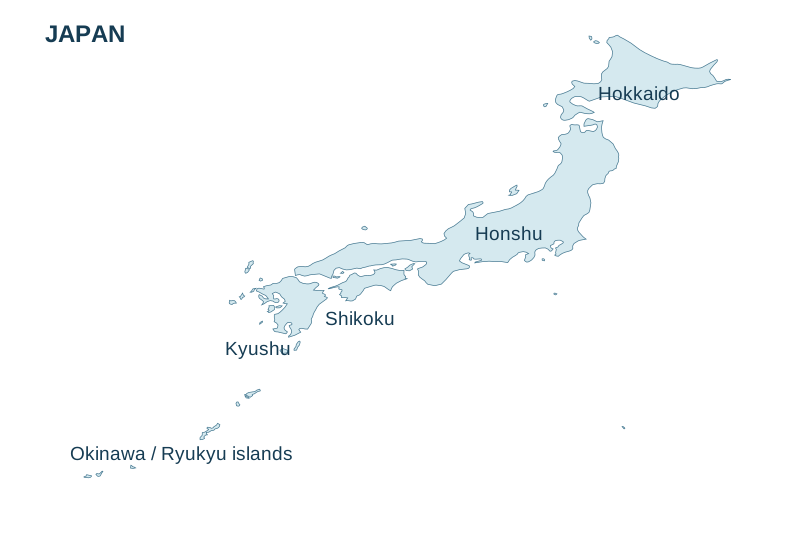
Geographic outline of Japan, including Hokkaido, Honshu, Shikoku, Kyushu and the southern island chain
Japan’s island geography. Outline: Natural Earth, public domain. Open larger map ↗
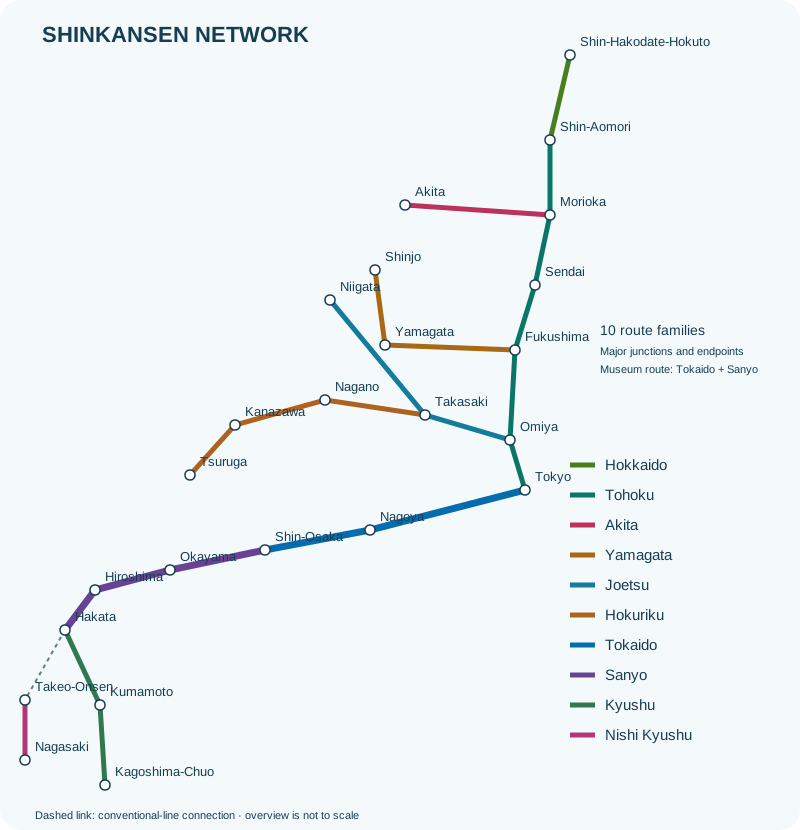
Nationwide Shinkansen schematic showing ten route families and their main junctions, including the separate Takeo-Onsen to Nagasaki section
Nationwide network overview · major junctions only, not all stations or to scale. Open larger network ↗

Our art journey covers Tokyo → Shin-Osaka → Hakata: the Tokaido and Sanyo corridor. Japan has other Shinkansen routes too.

Read the ten route families
  • Hokkaido: Shin-Aomori → Shin-Hakodate-Hokuto
  • Tohoku: Tokyo → Shin-Aomori
  • Akita: Morioka → Akita
  • Yamagata: Fukushima → Shinjo
  • Joetsu: Omiya → Niigata
  • Hokuriku: Takasaki → Tsuruga
  • Tokaido: Tokyo → Shin-Osaka
  • Sanyo: Shin-Osaka → Hakata
  • Kyushu: Hakata → Kagoshima-Chuo
  • Nishi Kyushu: Takeo-Onsen → Nagasaki

Akita and Yamagata are mini-Shinkansen branches. Services can run through shared sections towards Tokyo. Nishi Kyushu requires a conventional-line connection; the dashed link is not high-speed track.

Network reference: JR Group’s English Shinkansen map (March 2026) ↗. Our diagrams are independent illustrations.

SEE THE REAL TRAINS

Watch the railway operators’ introductions

Official videos introduce the trains in English. Links open YouTube; nothing plays or contacts YouTube until you follow a link.

JR East · GranClass (English)

A premium cabin introduction on JR East’s Shinkansen routes. These northern and eastern routes are outside this museum’s Tokyo–Hakata journey.

Watch JR East’s official English video ↗
Shinkansen in cinema · fictional thrillers

The Bullet Train (1975), directed by Junya Sato, was also released in France as Super Express 109. Overseas distributor’s film page ↗

Bullet Train Explosion (2025), directed by Shinji Higuchi, is a Netflix reboot of the 1975 film. View on Netflix ↗ · Official English teaser ↗

These are fictional danger stories, not railway safety lessons. Film images are not reproduced here because permission for this site has not been confirmed. Check local age ratings before watching.

Illustrative journey simulation — not live train location or a timetable. Approximate timing uses equal station intervals and a 5-hour full-route baseline. Service stopping patterns are not represented. Speed changes affect playback only.

AN HONEST FIRST EDITION

Old routes.
New perspectives.

These prints show historical towns, landscapes and regional stories. They do not depict modern Shinkansen stations. Each artwork states its connection to the station, including when that connection is regional.

All 35 stations are selectable. Verified station photographs fill stops awaiting an ukiyo-e. Woodblock prints and photographs are labelled separately, with individual sources and licences.

Your privacy

This static preview does not request your location or account details. Hosting providers receive ordinary request data such as IP addresses to deliver the site.

Optional Google Analytics, if configured, runs only after you accept. Advertising features are disabled. Station selections are not sent as analytics data. Your choice is stored in this browser and can be withdrawn here.